
The ACL is 1 of 4 ligaments that connects the Femur (Thigh bone) to the Tibia (Shin Bone). The ACL helps stabilize the knee and allows for pivoting and twisting movements.
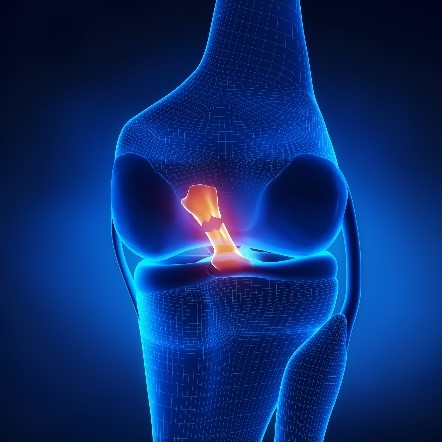
ACL injuries are becoming far more prevalent particularly in younger people in sports including Basketball, Netball, tennis, Football or Soccer.
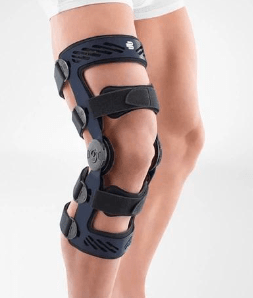
With an average recovery time of 6 – 9 months and the very real possibility wearing a brace like the one on the left, ACL injuries are one to be avoided.
However, ACL injury prevention programs have demonstrated a risk reduction of 52% in the female athletes and 85% in the male athletes.
Causes of ACL injuries
Weak muscular issues, athletes going too hard too young with too much or inappropriate training and competing at an early age all lead to a propensity to ACL injuries.
What is in an ACL injury Prevention program?
An ACL injury Prevention Program is a plan of exercises and activities that help to minimise the chances of an ACL injury. These mainly focus on the Glutes, hamstrings, and Quadriceps but will include some more of the smaller stabilising muscles (e.g. Tensor Fasciae, Iliotibial band etc)
Plyometrics
Plyometrics are explosive body weight exercises, generally including jumping and hopping. They are used to build speed and Power.
Neuromuscular Training
Neuromuscular Training involves exercises that essentially teaches your nervous system how to make the muscles work. This is usually done by practising correct movements with single-leg stability activities, dynamic joint stability exercises, jump training, plyometric exercises, agility drills, and sport-specific exercises. The important element here is the correct and relevant movement.
Strength Training
Strength training as part of a program can be beneficial. By strengthening the quadriceps and hamstrings muscles especially, ACL injuries can be minimised. Examples of exercises include squats, lunges, single leg raises. Important points are, it is only part of a program and must be used in conjunction with other strategies, also this does not necessarily mean big heavy weight training, body weight or resistance bands can be used just as effectively.
Avoid working out while overly fatigued.
Fatigue has been related to increased risk of injury in the athletic population. Fatigue causes increased side to side movement (Sagittal plane) and front to back movements (Frontal plane) and greater ground contact force which can lead to ACL injuries.
Checking for propensity to ACL injuries
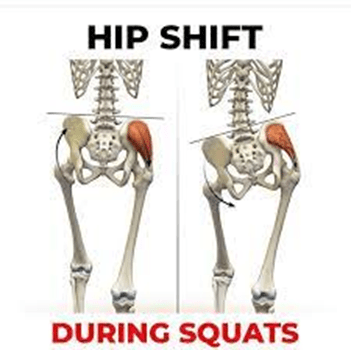
Observe the athlete in a fatigued state looking for altered movements.
Lateral Displacement of the Pelvis During Squatting Motion. I.e., hip drop
Some starter strength exercises.
Note: this is in no way a complete exercise or strength program. These exercises strengthen the Glutes, hamstrings, and Quadriceps. By strengthening these muscles, it will help limit (but not eliminate) the chance of ACL injuries.
All strength exercises should be done slowly and with correct form to avoid injury and have the desired effect.
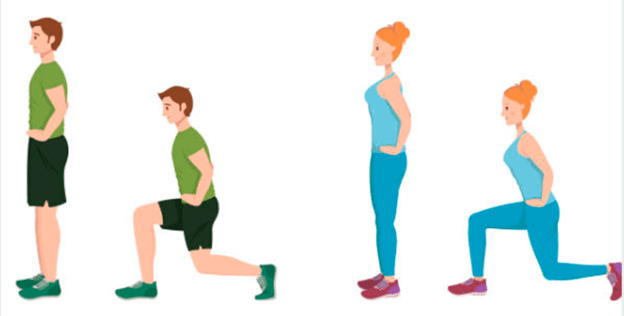
Lunge
Take a medium size step, lower the rear knee to almost touch the ground. The rear quadricep (Thigh) should be parallel to the front calf and form a square. Movement should be slow and controlled.
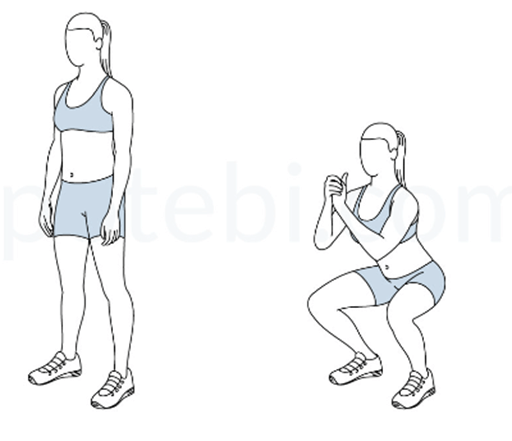
Squat
Feet shoulder width apart and pointing straight. Lower so thighs are parallel to ground, hold, slowly come back to standing.
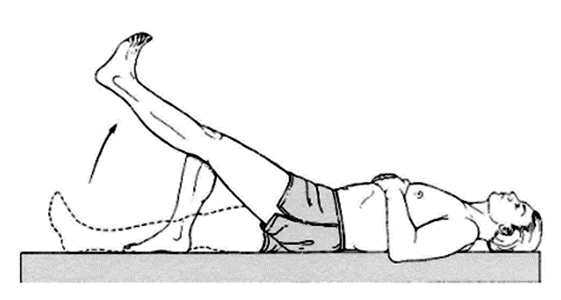
Single leg raise
Lying flat on back, bend one leg. Slowly raise other leg to the height of the other knee. Slowly lower to ground.
Note: This is not a full exercise or strength program, nothing will completely eliminate the risk of an ACL injury. Always consult a qualified GP, physiotherapist or similar for advice.
 Active Athletics